
OTT vs IPTV: What’s the Difference and Which Should You Choose in 2026?

The core OTT IPTV distinction is network type: IPTV delivers television over a closed, provider-managed network with reserved bandwidth, while OTT streams over the open public internet to any connected device. Both send video over IP, but that one structural difference explains almost every other gap in cost, quality, and flexibility between them.

Streaming services now dominate how people watch TV, and the terms OTT and IPTV get used interchangeably even though they describe different delivery methods. If you’re choosing a service for live sports, must-watch shows, or replacing cable entirely, understanding the difference between IPTV and OTT will save you money and buffering headaches. This guide breaks down how each technology works, where each one wins, and why a provider like RevoIPTV is built to give you IPTV-grade stability without giving up OTT-style flexibility.
What Is OTT IPTV?
OTT IPTV is shorthand people search for when comparing two internet-video technologies that are often confused for one product:
- IPTV (Internet Protocol Television) delivers live channels and on-demand video through a private, operator-managed network using protocols like RTP, RTSP, and MPEG-TS. Bandwidth is reserved specifically for video, similar to how traditional cable worked but over IP instead of coaxial cable.
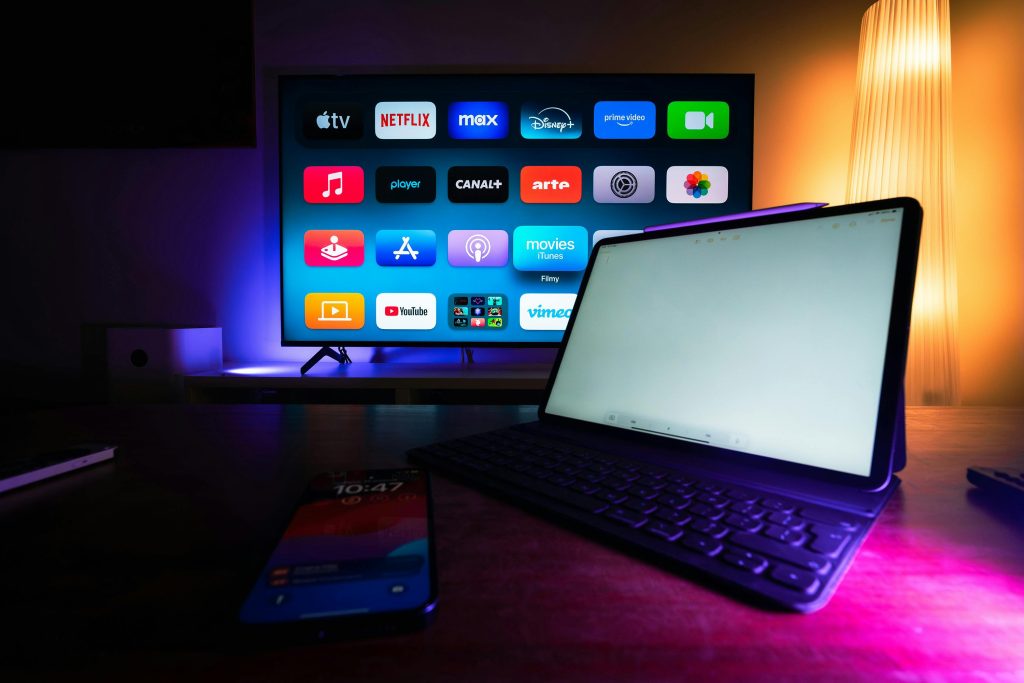
- OTT (Over-The-Top) delivers video 'over the top' of your existing internet connection using standard web protocols like HLS and MPEG-DASH. Netflix, Disney+, YouTube TV, and Hulu are all OTT services — no special network arrangement required.
Both rely on the internet and both stream to apps or devices, which is why the line blurs for most viewers. The real difference is infrastructure: who controls the network the video travels across, and how much of that bandwidth is guaranteed versus shared.
What Is the Difference Between IPTV and OTT?
Here is a direct, side-by-side breakdown of IPTV vs OTT across the factors that actually affect your viewing experience:
| Factor | IPTV | OTT |
|---|---|---|
| Network | Private, operator-managed | Open public internet |
| Delivery method | Multicast (one stream, many viewers) | Unicast (individual stream per viewer) |
| Protocols | RTP, RTSP, MPEG-TS | HLS, MPEG-DASH |
| Quality control | Consistent — bandwidth is reserved | Variable — depends on your connection and CDN load |
| Hardware | Often needs a set-top box or IPTV app | Works on almost any smart device |
| Reach | Limited to the operator’s network/subscribers | Global, wherever there’s internet |
| Typical cost | Bundled or subscription, infrastructure-backed | Usually lower, app-based subscriptions |
| Best for | Live sports, news, stable long-session viewing | On-demand libraries, multi-device flexibility |
For background on how video traffic has scaled industry-wide, see Cisco’s Annual Internet Report.
How Does IPTV Work?
IPTV transmits video through a dedicated network path rather than the shared public internet. Because the operator controls the infrastructure end-to-end, it can guarantee bandwidth for video the way phone companies guarantee call quality.
- Multicast distribution: A single video stream is sent once and replicated efficiently to every viewer watching the same channel, instead of sending a separate stream per person. This keeps server load low even during peak hours.
- Reserved bandwidth: Because capacity is set aside specifically for video, IPTV avoids the congestion that public-internet traffic can cause during a big live event.
- App or set-top box playback: Content is decoded either through a dedicated box or a compatible app, which is why device support varies more than it does for OTT.
This is why IPTV remains the go-to choice for live sports and breaking news, where a mistimed buffer wheel is the difference between watching the goal and missing it.
How Does OTT Work?
OTT skips dedicated infrastructure entirely. It uses adaptive bitrate streaming (HLS/MPEG-DASH) to automatically adjust video quality in real time based on your current connection speed, delivered through content delivery networks (CDNs) that cache video closer to you geographically.
Benefits of OTT
- Universal device support: Phones, smart TVs, laptops, tablets, game consoles — no special hardware.
- Elastic scalability: Cloud-based CDNs can absorb sudden traffic spikes far more easily than a fixed private network.
- No ISP lock-in: You can switch broadband providers without losing access to your OTT subscriptions.
The tradeoff: because OTT rides on whatever internet connection you have at the moment, quality is only as good as your weakest link — your Wi-Fi, your router, or your ISP’s peak-hour congestion.
OTT vs IPTV — Pros and Cons
IPTV Pros
- Stable, high-quality streaming even during peak viewing hours
- Lower latency for live content thanks to managed bandwidth
- Bundled channel + on-demand libraries in one place
IPTV Cons
- May require a compatible app or box
- Quality depends on the provider’s infrastructure quality — choosing a reputable one matters
OTT Pros
- Lower typical cost and flexible plans
- Works on virtually any device with no setup friction
- Global accessibility — no regional network restriction
OTT Cons
- Quality fluctuates with your home network and ISP load
- Can buffer during high-demand live events on shared internet infrastructure

Bandwidth You Actually Need for Each
Regardless of which technology you choose, your connection speed determines your ceiling for picture quality:
- SD streaming: around 5 Mbps
- HD streaming: around 10 Mbps
- 4K streaming: 25 Mbps or higher, plus a stable connection to avoid drops during motion-heavy scenes like sports
For general home-network speed benchmarks, see the FCC’s broadband speed guide. IPTV’s reserved bandwidth means you’re more likely to hit your promised quality consistently; OTT’s adaptive bitrate means you’ll rarely see a hard stop, but the resolution may quietly drop when your network is under load.
Is IPTV Legal?
Yes — IPTV as a technology is completely legal; it’s simply a delivery method, no different from cable or satellite. What matters is whether the provider holds proper licensing for the content it streams. Unlicensed 'pirate' IPTV services that offer premium channels for a few dollars a month are the ones that create legal risk for subscribers, not the underlying technology. Choosing a transparent, legitimately licensed provider like RevoIPTV avoids that risk entirely.
The Future: 5G, Hybrid Delivery, and Cloud TV
The line between OTT and IPTV is already blurring. Faster 5G networks are narrowing the quality gap for OTT on mobile, while hybrid IPTV+OTT models — combining managed-network reliability with app-based flexibility — are becoming the norm rather than the exception across the streaming industry. Cloud TV platforms now let providers offer live channel bundles with the reach and device freedom of OTT, without sacrificing the quality control IPTV is known for. In practice, this means the 'OTT vs IPTV' choice is increasingly not either/or.
Why RevoIPTV Combines the Best of Both
RevoIPTV is built around that hybrid principle: 100% legal streaming with the consistent, low-buffering quality associated with managed IPTV networks, delivered through apps that work across the same range of devices you’d expect from OTT. You get live channels, on-demand libraries, and dependable playback without being locked into special hardware.
Start with an instant IPTV free trial to test real-world quality on your own devices before paying anything. Once you’re satisfied, compare tiers on the IPTV pricing and subscriptions page, check supported devices on the IPTV applications page, and walk through setup with the step-by-step tutorials. If you’re looking to resell rather than just watch, RevoIPTV also offers IPTV reseller packages. Common setup and billing questions are answered in the RevoIPTV FAQs.
FAQ
What is the main difference between IPTV and OTT?
IPTV runs on a private, operator-managed network with reserved bandwidth for consistent quality; OTT runs over the open public internet and works on virtually any device, but quality depends on your connection.
Is IPTV better than OTT for live sports?
Generally yes. IPTV’s managed bandwidth reduces the buffering and lag risk during high-traffic live moments, which matters most for fast-moving sports and breaking news coverage.
Do OTT services like Hulu Live or YouTube TV count as IPTV?
No. Even though they offer live channels, they’re delivered over the open internet using unicast streaming, which technically classifies them as OTT, not IPTV.
Is IPTV legal to use?
IPTV technology itself is legal. Legal risk comes from unlicensed providers streaming copyrighted content without rights — always choose a provider that’s transparent about its licensing.
How much internet speed do I need for IPTV or OTT streaming?
Plan for roughly 5 Mbps for SD, 10 Mbps for HD, and 25+ Mbps for stable 4K streaming, regardless of which delivery method you use.
Which is better for me — OTT or IPTV?
Choose OTT if device flexibility and low cost matter most; choose IPTV if consistent, low-buffer quality for live TV is the priority. A hybrid provider like RevoIPTV is designed so you don’t have to pick just one.
Join the conversation
Read next

0 responses on “OTT vs IPTV: What’s the Difference and Which Should You Choose in 2026?”